FREE Shipping $50+
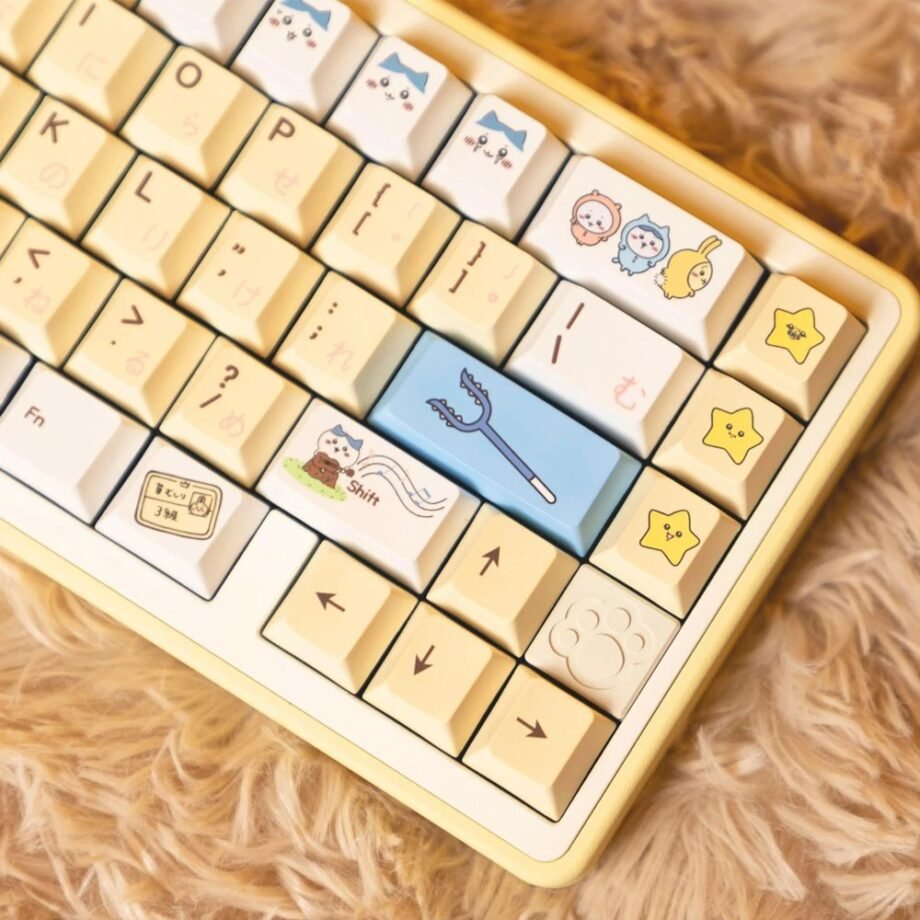
Searching for Chiikawa keyboards and wondering whether you need a complete keyboard or just keycaps to bring Japan’s most relatable kawaii characters to your desk? You’ve found the definitive Chiikawa guide for 2026, covering everything from understanding the difference between keyboards and keycaps (and why keycaps are usually the smarter choice) to exploring Chiikawa’s character universe and emotional resonance, building pastel aesthetic setups that capture the series’ soft colour palette, and creating workspaces that acknowledge life’s struggles while maintaining cuteness. Whether you’re a dedicated Chiikawa fan who relates to the characters’ everyday anxieties or a newcomer drawn to the gentle pastel aesthetic, this guide helps you build a keyboard that represents finding comfort in small, cute things.
Chiikawa represents a new evolution in kawaii culture. Unlike traditional cute characters who exist in perpetually cheerful worlds, Chiikawa and friends navigate real difficulties – job hunting, social anxiety, financial stress, the weight of adult responsibilities – while maintaining adorable exteriors. The series resonates with millennials and Gen Z who appreciate that acknowledging struggle and embracing cuteness aren’t mutually exclusive. Chiikawa keycaps aren’t escapism – they’re companions through the realities of modern life.
This guide explains keyboard vs keycaps fundamentals (saving you money and maximizing compatibility), explores Chiikawa’s character personalities and what makes each relatable, breaks down the series’ signature pastel aesthetic and how it translates to keyboards, provides frameworks for building Chiikawa setups that balance cute with capable, and helps you understand why this particular kawaii series connects so deeply with people navigating adult life’s uncertainties.
Understanding Chiikawa: Japan’s Most Relatable Kawaii
Before building your Chiikawa keyboard, understanding the series’ unique position in kawaii culture clarifies why these keyboards carry specific emotional weight beyond typical cute aesthetics.
What Makes Chiikawa Different
Chiikawa (ちいかわ, “chiisai kawaii” meaning “something small and cute”) launched in 2020 through Twitter manga by illustrator Nagano. The series exploded in popularity during the pandemic, when its themes of struggling through uncertain times while seeking small comforts resonated powerfully.
The Chiikawa difference: Most kawaii characters exist in idealized worlds without real conflict. Hello Kitty has friends and pleasant adventures. Sanrio characters face minor, resolvable problems. Chiikawa characters face actual adult struggles:
- Job hunting and employment instability
- Social anxiety and communication difficulties
- Financial constraints and resource scarcity
- Feelings of inadequacy and self-doubt
- The exhaustion of maintaining cheerfulness
- Dangerous creatures and genuine threats in their world
Yet they navigate these difficulties while remaining small, cute, and hopeful. That combination – acknowledging real hardship while refusing to abandon cuteness – creates the series’ unique appeal.
Why this matters for keyboards: A Chiikawa keyboard isn’t just cute decoration. It’s a daily reminder that struggling doesn’t negate your right to enjoy small, beautiful things. Your workspace can acknowledge difficulty while maintaining aesthetic comfort.
The Chiikawa Character Universe

Chiikawa features an ensemble cast where each character represents different approaches to navigating difficult circumstances:
Chiikawa (the character): Small, anxious, earnest. Tries hard despite fears. Often overwhelmed but keeps going. Represents people who feel small in big, scary worlds but persist anyway.
Hachiware: Optimistic, supportive, naturally talented. The friend who makes things slightly better through genuine kindness. Represents the people in our lives who help us through difficulties.
Usagi (Rabbit): Energetic, unpredictable, somewhat chaotic. Does things their own way without explanation. Represents embracing weirdness and refusing to conform to expectations.
Momonga (Flying Squirrel): Quiet, mysterious, occasionally appears to help. Represents unexpected assistance and the kindness of near-strangers.
Kurimanju (Chestnut Manjū): Round, food-based creature. Represents finding joy in simple, comforting things.
This character diversity allows Chiikawa keyboards to represent specific emotional states or personal identification. Choosing Chiikawa (the character) signals “I relate to anxiety but keep trying.” Choosing Hachiware signals “I try to help others even when I’m struggling too.”
Why Chiikawa Resonates With Adults
Chiikawa’s explosive popularity among working adults stems from its honest depiction of modern life’s emotional landscape:
Pandemic relatability: Launched during global uncertainty when many felt small, powerless, and anxious. Chiikawa characters’ experience of navigating scary, unpredictable circumstances mirrored collective experience.
Millennial/Gen Z resonance: Generations facing economic instability, climate anxiety, and social pressure find Chiikawa’s depiction of struggling-while-cute more honest than traditional kawaii’s relentless cheerfulness.
Japanese work culture: In Japan specifically, Chiikawa reflects pressures of employment instability, social conformity expectations, and the exhaustion of maintaining professional personas. Characters seeking small comforts mirrors real coping strategies.
Permission to be small: The series validates feeling overwhelmed, scared, or inadequate while maintaining dignity and cuteness. You can be struggling and still deserve beautiful things on your desk.
For keyboards, this emotional depth makes Chiikawa more than aesthetic choice. It’s identity statement about acknowledging difficulty while refusing to abandon joy in small, cute things.
Keyboard vs Keycaps: The Essential Difference

Most people searching “Chiikawa keyboard” actually need Chiikawa keycaps, not complete keyboards. Understanding this distinction saves money and provides better results.
Complete Keyboards vs Keycaps: What’s the Difference?
Complete keyboard (full unit):
- Case (aluminum, plastic, wood housing)
- Circuit board (PCB with electronics)
- Switches (mechanical components creating keypress feel and sound)
- Stabilizers (support for larger keys like spacebar)
- Keycaps (the visible, typeable part on top)
Keycaps (just the top layer):
- Plastic pieces that sit on switches
- Create visual appearance
- Can be removed and replaced on any compatible keyboard
- Don’t affect core typing mechanics (that’s switches and build)
The critical insight: When you see “Chiikawa keyboard” in photos, you’re usually seeing Chiikawa keycaps installed on good mechanical keyboards. The Chiikawa part is removable and replaceable.
Why Keycaps Are Usually the Smart Choice
For Chiikawa themes specifically, keycaps offer superior advantages:
Cost effectiveness: Chiikawa keycaps ($30-60) vs complete custom keyboard with Chiikawa theme ($150-400). You get the aesthetic for fraction of cost.
Compatibility: Keycaps work with keyboards you already own. No need to replace functioning equipment to get Chiikawa aesthetic.
Flexibility: Change between Chiikawa and other keycap sets depending on mood. Your keyboard isn’t permanently Chiikawa.
Quality control: Focus budget on good keyboard base (switches, build quality) separately from aesthetic choice (keycaps). This separation creates better long-term value.
Easy maintenance: If keycaps get damaged, dirty, or you want different Chiikawa designs, replace just keycaps rather than entire keyboard.
When Complete Chiikawa Keyboards Make Sense
Complete Chiikawa keyboards are worth considering in specific scenarios:
You don’t own mechanical keyboard: If starting from scratch, pre-built keyboard with Chiikawa keycaps included simplifies purchase.
Gift giving: Complete keyboards make better gifts than keycap sets requiring installation knowledge.
You want matching ecosystem: Some vendors offer complete Chiikawa setups with matching case colour, cable, keycaps creating cohesive aesthetic.
Permanent dedication: If you’re certain you want Chiikawa permanently and won’t rotate keycap sets, integrated approach works fine.
However, most enthusiasts find keycaps-only approach provides better value and flexibility.
Installing Chiikawa Keycaps: Is It Difficult?
Keycap installation requires no technical knowledge:
- Pull existing keycaps off with keycap puller (simple plastic tool)
- Place Chiikawa keycaps onto switch stems
- Press down firmly until they click into place
The process takes 10-20 minutes. If you can snap Lego pieces together, you can install keycaps.
No soldering, programming, or technical skills required. This makes keycaps accessible to anyone wanting Chiikawa aesthetic regardless of mechanical keyboard knowledge.
Chiikawa’s Pastel Aesthetic: Colour Psychology and Design

Chiikawa’s signature visual element is its soft pastel colour palette. Understanding these colours helps build keyboards that authentically capture the series’ emotional tone.
Soft Pastels vs Bright Kawaii
Chiikawa’s colour philosophy differs from traditional bright kawaii:
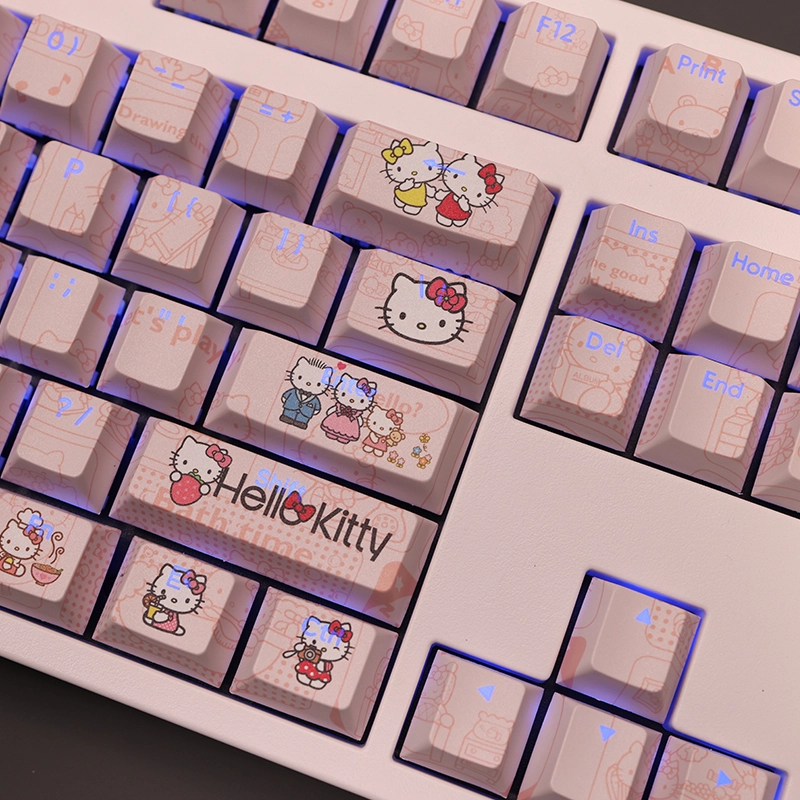
Traditional kawaii (Hello Kitty, etc.): Bright pink, vivid red, saturated colours. High energy, cheerful, optimistic.
Chiikawa pastels: Soft pink, gentle blue, muted yellow, pale green. Calm, comforting, slightly melancholic.
The Chiikawa pastel keycaps captures this aesthetic with soft colour blocking that creates gentle, soothing visual atmosphere rather than energetic brightness.
Psychological effect: Pastel colours reduce visual stress, create calming environments, and suggest emotional gentleness. Bright colours energize; pastels comfort. For people dealing with anxiety or overwhelm (Chiikawa’s core audience), pastel workspace reduces rather than adds stimulation.
Chiikawa Character Colour Associations
Different Chiikawa characters associate with specific pastel colours:
Chiikawa (character): Soft pink and white. The gentlest, most vulnerable aesthetic. Signals sensitivity and emotional openness.
Hachiware: Light blue and white. Calm, reliable, supportive energy. Creates trustworthy, stable feeling.
Usagi: Pale yellow and white. Quirky, unpredictable, but ultimately harmless. Adds playfulness without aggression.
Combined palette: Mixing character colours (pink, blue, yellow) on single keyboard creates full Chiikawa universe representation. The pastel harmony prevents colour clash that brighter kawaii might create.
Pastel Keycaps and Professional Environments
Chiikawa’s soft pastels work surprisingly well in professional contexts:
Conservative workplaces: Pastel colours read as “sophisticated colour choice” rather than “childish toy.” Without explicit character imagery, pink/blue/yellow pastels appear as aesthetic design rather than cartoon reference.
Video call backgrounds: Soft colours don’t create distracting brightness in video backgrounds. Your keyboard adds personality without overwhelming professional appearance.
Reduced eye strain: Pastels create less visual fatigue than bright colours during long work sessions. The gentle aesthetic supports productivity rather than hindering it.
Seasonal flexibility: Pastel Chiikawa keyboards work year-round. Unlike seasonal themes (Halloween orange, Christmas red/green), soft pink/blue/yellow transitions smoothly between seasons.
This makes Chiikawa keyboards viable for people who need workplace-appropriate aesthetics but want personal expression.
Building Your Chiikawa Keyboard Setup

Practical approaches to creating Chiikawa-themed keyboards that balance the series’ emotional resonance with functional typing needs.
Starting With Good Foundation
Chiikawa aesthetic works best on solid mechanical keyboard foundation:
Recommended keyboard bases:
- Budget ($50-80): Keychron, Royal Kludge, Redragon mechanical keyboards with hot-swap switches
- Mid-range ($80-150): Leopold, Varmilo, Ducky keyboards with quality PBT base keycaps
- Premium ($150-300): Custom mechanical keyboards from GMMK, Mode, or similar enthusiast brands
Why foundation matters: Chiikawa keycaps make any keyboard look good, but they can’t fix poor typing feel, mushy switches, or unstable construction. Invest in decent keyboard, then add Chiikawa aesthetics.
Switch selection: For Chiikawa’s soft aesthetic, consider:
- Linear switches (smooth, quiet): Gateron Milky Yellow, Cherry MX Red
- Tactile switches (gentle bump): Gateron Brown, Boba U4T
- Avoid loud clicky switches that contradict Chiikawa’s gentle vibe
Chiikawa Keycap Integration
The Chiikawa keycaps set typically uses pastel colour blocking with character novelty keys. Integration strategies:
Full Chiikawa coverage: Replace all keycaps with Chiikawa set. Creates maximum character presence and complete pastel aesthetic. Best for dedicated fans or home office setups.
Accent integration: Use Chiikawa novelty keys (character faces, themed designs) on Escape, Enter, or Windows keys while keeping standard keycaps elsewhere. Creates Chiikawa presence without overwhelming professional aesthetic.
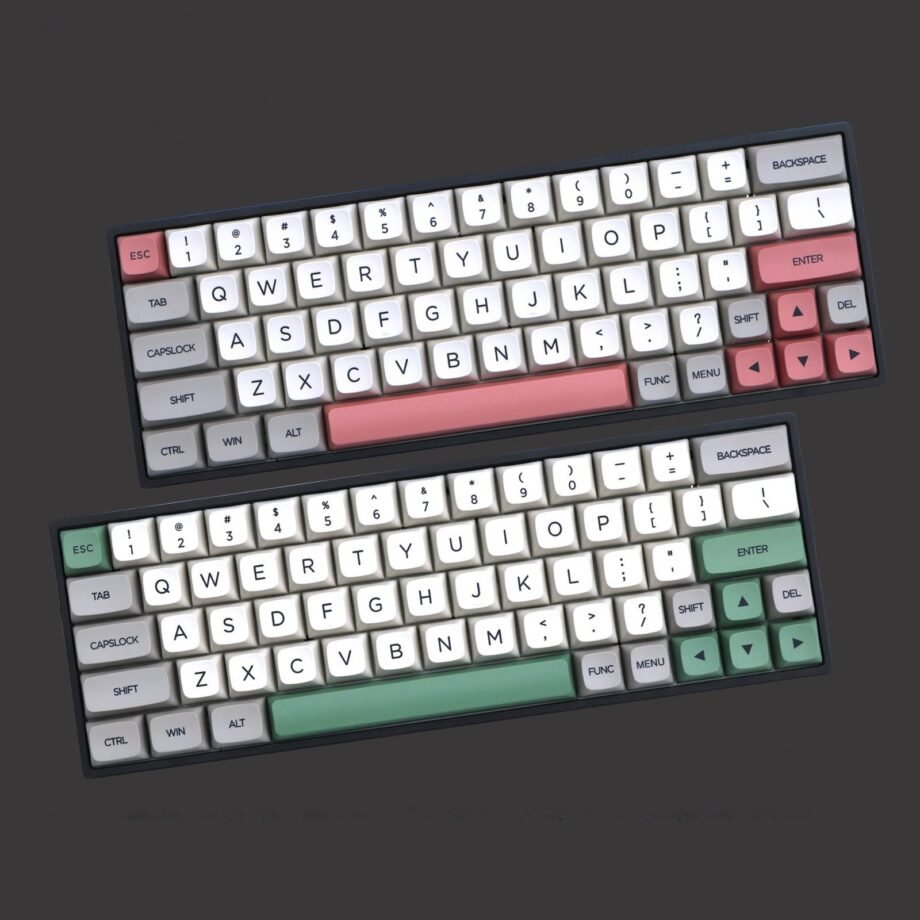
Mixed pastel approach: Combine Chiikawa pastels with complementary neutral keycaps. Pink Chiikawa modifiers with white/grey alphas balances cute with subtle.
Character focus: If one Chiikawa character resonates most strongly, emphasize their colour. Hachiware fans use more blue, Chiikawa (character) fans use more pink, Usagi fans use more yellow.
Workspace Atmosphere Creation
Chiikawa keyboards work best when broader workspace echoes the series’ emotional tone:
Comfort elements:
- Soft lighting (warm white or pink LED strips)
- Small plushies or figures (Chiikawa, Hachiware, Usagi companions)
- Gentle textures (soft desk mats, cozy lighting)
- Plants or nature elements (connects to Chiikawa’s outdoor adventures)
Functional priorities:
- Ergonomic setup (Chiikawa characters struggle enough; don’t add physical discomfort)
- Good monitor positioning (reduce eye strain)
- Comfortable seating (acknowledge your body’s needs)
- Organized storage (reduce visual chaos that increases anxiety)
Emotional balance: Chiikawa aesthetic shouldn’t enable avoidance. The characters keep trying despite difficulty. Your workspace should support effort while providing comfort, not facilitate escapism.
Budget-Conscious Chiikawa Builds
Creating Chiikawa keyboards without excessive spending:
Essential-only approach: Quality mechanical keyboard base ($60-100) + Chiikawa keycaps ($40-60) = $100-160 total. Skip expensive custom keyboards, focus on good switches and Chiikawa aesthetic.
Existing keyboard transformation: If you own mechanical keyboard with Cherry MX-compatible switches, just buy Chiikawa keycaps ($40-60). Transform existing equipment rather than replacing.
Gradual building: Start with Chiikawa novelty keys only ($15-25), add full sets later. Immediate Chiikawa presence without full investment.
Sales and group buys: Watch for Chiikawa keycap sales, group buys, or second-hand sets. Kawaii keycaps often available at discounts during seasonal sales.
The Chiikawa philosophy – finding joy in small things despite financial constraints – applies to building Chiikawa keyboards. You don’t need premium everything to create meaningful aesthetic.
Chiikawa Character Identification and Personal Connection

Different Chiikawa characters resonate with different personality types and life situations. Understanding this helps build keyboards reflecting your authentic emotional landscape.
When You Relate to Chiikawa (the Character)
You might relate to Chiikawa if:
- You often feel overwhelmed by responsibilities or expectations
- You try hard despite persistent anxiety or self-doubt
- You’re naturally cautious and worry about outcomes
- You feel smaller and less capable than others around you
- You keep going even when afraid
Keyboard aesthetic for Chiikawa identification:
- Dominant soft pink colour palette
- Gentle, rounded character imagery
- Minimal or soft RGB (harsh lighting contradicts vulnerability)
- Comfortable typing experience (acknowledging sensitivity)
- Workspace focused on emotional comfort over maximum productivity
Chiikawa (character) keyboards create safe-feeling spaces for people navigating anxiety while maintaining daily effort.
When You Relate to Hachiware
You might relate to Hachiware if:
- You naturally support friends and colleagues despite own struggles
- You maintain optimism even when circumstances are difficult
- You’re the person others lean on for emotional support
- You sometimes wonder if anyone considers your needs
- You find meaning in helping others succeed
Keyboard aesthetic for Hachiware identification:
- Dominant light blue colour palette
- Bright but not harsh workspace lighting
- Shared desk setup (collaborative work environment)
- Quality peripherals (you deserve good tools too)
- Organized, helpful workspace (reflects your supportive nature)
Hachiware keyboards remind supporters that their emotional labour matters and they deserve comfort too.
When You Relate to Usagi
You might relate to Usagi if:
- You often feel like the weird one who doesn’t fit standard expectations
- You do things your own way without explaining yourself
- You sometimes confuse or concern others with your approaches
- You’re more capable than people assume based on your oddness
- You refuse to diminish your authentic self for others’ comfort
Keyboard aesthetic for Usagi identification:
- Pale yellow colour emphasis with unexpected accents
- Unconventional keycap placements or layouts
- RGB that shifts unpredictably
- Personal desk organization that makes sense only to you
- Workspace that prioritizes your methods over standard advice
Usagi keyboards celebrate being different and refusing to apologize for authentic weirdness.
Multi-Character Appreciation
If you connect with all Chiikawa characters:
You likely appreciate the series’ broader themes – that different personality types all struggle, all deserve support, and all have value despite difficulties. Multi-character keyboards represent this inclusivity.
Multi-character keyboard approach:
- Mixed pastel colours (pink, blue, yellow distributed across keyboard)
- Multiple character novelty keys representing different emotional states
- Balanced workspace supporting different moods and needs
- Flexibility in setup allowing different working styles
This signals “I see complexity in emotional experience and value all of it.”
Chiikawa in Context: Workplace and Daily Use
Practical considerations for using Chiikawa keyboards in various life contexts.
Professional Workplace Integration
Creative/tech industries: Full Chiikawa keyboards work well. The series’ popularity among Japanese millennials makes it recognizable pop culture reference rather than childish indulgence.
Conservative industries: Strategic integration recommended:
- Character novelties only (no full Chiikawa keycaps)
- Pastel colour palette without explicit imagery
- Position keyboard facing you rather than visible to colleagues
- Build reputation for competence first, then add personality touches
Remote work: Maximum freedom. Your Chiikawa keyboard appears only in video backgrounds where it reads as personality expression rather than workplace violation.
Client-facing roles: Consider your industry. Design/media clients may appreciate kawaii awareness. Traditional corporate clients might expect neutral aesthetics.
Emotional Support Through Difficult Periods
Chiikawa’s core appeal is providing comfort during struggle. Your keyboard can actively support emotional wellbeing:
During job searches: Chiikawa characters’ employment struggles mirror real experience. The keyboard reminds you that struggling doesn’t mean failing.
During burnout: Soft pastels reduce visual stress. Character reminders validate that exhaustion while trying counts as effort.
During social anxiety: Characters who also struggle with communication provide companionship. You’re not alone in finding social interaction difficult.
During general uncertainty: Series acknowledges that scary, unpredictable things happen. Maintaining small comforts (nice keyboard) while navigating difficulty is valid coping.
The keyboard isn’t escapism – it’s acknowledgment that comfort and struggle coexist.
Community and Shared Understanding
Chiikawa keyboards create connection opportunities:
Recognition by others: Fellow Chiikawa fans recognize your keyboard. Instant shared understanding of emotional landscape and coping strategies.
Conversation starters: People ask about cute pastel keyboard. Explaining Chiikawa provides natural conversation entry point.
Online communities: Sharing Chiikawa setup in mechanical keyboard or kawaii communities connects you with others who appreciate the series.
Validation of experience: Seeing others also use Chiikawa aesthetics reminds you that struggling-while-trying is common, valid experience.
When Chiikawa Aesthetic Helps vs Hinders
Chiikawa keyboards help when:
- They remind you struggling doesn’t negate your right to nice things
- They reduce visual stress through gentle colours
- They create emotional comfort supporting productivity
- They signal self-permission to be both struggling and cute
Chiikawa aesthetic becomes problematic if:
- It enables avoidance of necessary difficult tasks
- It becomes excuse for not addressing fixable problems
- You prioritize aesthetic over functionality (poor keyboard with cute keycaps)
- It represents idealization of struggle rather than acknowledgment with hope
The series works because characters keep trying despite difficulty. The keyboard should support effort, not replace it.
Chiikawa Keycaps FAQ
What is Chiikawa and why is it so popular?
Chiikawa is a Japanese manga/character series featuring small cute creatures navigating adult difficulties like job hunting, financial stress, and social anxiety. It became explosively popular during the pandemic because it acknowledges real struggles while maintaining cuteness and hope.
Unlike traditional kawaii that’s purely cheerful, Chiikawa validates that life is hard and you can still enjoy small, beautiful things. This honest-but-cute approach resonates with millennials and Gen Z facing economic uncertainty and life pressures.
Do I need to know Chiikawa lore to use the keycaps?
No. Chiikawa keycaps work beautifully as soft pastel aesthetic regardless of series familiarity. The gentle colours create calming workspace whether or not you’ve followed character storylines.
That said, understanding character personalities enriches the experience. When you know Chiikawa (character) represents persistent anxiety, Hachiware represents supportive friendship, and Usagi represents embracing weirdness, your keyboard becomes more than decoration – it’s daily reminder of values you appreciate.
Are Chiikawa keycaps childish for professional adults?
Chiikawa is explicitly adult-focused content despite cute appearance. The series addresses employment instability, financial anxiety, and adult relationship complexities. Japanese professionals in their 20s-30s are primary audience.
Pastel aesthetic reads as sophisticated colour choice rather than childish in most contexts. Without character imagery, pink/blue/yellow Chiikawa palette appears as design decision comparable to any colour coordination.
If your workplace accepts personality expression, Chiikawa keyboards demonstrate cultural awareness and emotional intelligence (recognizing that acknowledging struggle is mature, not weak).
Can I mix Chiikawa with other kawaii characters?
Technically yes, but aesthetic considerations matter. Chiikawa’s soft pastels clash with brighter kawaii (Hello Kitty’s vivid pink, Kuromi’s deep purple/black). Mixing creates visual confusion.
Better approach: Dedicate keyboards to specific aesthetics. Chiikawa keyboard separate from Hello Kitty keyboard. If you want variety, rotate keycap sets rather than mixing incompatible colour palettes on single keyboard.
Exception: Other pastel kawaii (My Melody’s soft pink, Cinnamoroll’s gentle blue) coordinate well with Chiikawa. Mixed pastel approach can work with careful colour matching.
Where can I learn more about Chiikawa before choosing keycaps?
Chiikawa anime series on Netflix provides excellent character introduction and emotional context. Even few episodes clarify why specific characters resonate with different personality types.
For deeper understanding, Chiikawa manga (available through Japanese bookstores or digital platforms) explores character development and world-building. However, basic character familiarity from anime suffices for meaningful keycap choice.
Do Chiikawa keycaps work with any mechanical keyboard?
Chiikawa keycaps work with any keyboard using Cherry MX-compatible switches (which includes most mechanical keyboards). They require Cherry MX, Gateron, Kailh, or similar cross-stem switches.
They don’t work with Topre, Alps, or other non-Cherry-compatible switch types. Verify your keyboard’s switch compatibility before purchasing.
If unsure about your keyboard, check manufacturer specifications or ask in mechanical keyboard communities.
How do pastel keycaps affect typing experience?
Colour doesn’t affect typing mechanics – switches determine feel and sound. However, colour affects psychological experience:
Pastel benefits:
- Reduced eye strain vs bright colours
- Calming visual atmosphere
- Less mentally stimulating (good for focus)
- Softer aesthetic matches gentle typing approach
Potential considerations:
- Lower contrast may reduce legend visibility in dim lighting
- Some people prefer energizing bright colours for motivation
- Personal colour preferences matter more than objective superiority
Try to see pastel keycaps in person or view detailed photos before purchasing if concerned about colour preference.
Are Chiikawa characters appropriate for children?
Chiikawa addresses adult themes (employment anxiety, financial stress, genuine danger) through cute lens. While not inappropriate for children, the emotional resonance targets adults navigating similar struggles.
Young children might enjoy cute appearance without understanding deeper context. Teenagers might connect with characters’ social anxieties and pressure to succeed.
For children’s keyboards, consider whether Chiikawa’s acknowledgment of difficult emotions benefits or overwhelms. More straightforwardly cheerful kawaii (Hello Kitty, Pokemon) might suit younger children better.
Your Path to Chiikawa Comfort

You now understand the keyboard vs keycaps difference (and why keycaps usually offer better value and flexibility), Chiikawa’s unique position as kawaii that acknowledges real struggle, how the series’ soft pastel aesthetic creates calming workspace environments, which characters represent different approaches to navigating difficulty, and how to build Chiikawa keyboards supporting emotional wellbeing while maintaining functionality.
Whether you relate to Chiikawa’s anxious persistence, Hachiware’s supportive kindness, or Usagi’s unapologetic weirdness, Chiikawa keycaps create daily reminders that struggling doesn’t negate your right to small, beautiful things.
If you’re exploring broader kawaii aesthetics, our cute keycaps guide covers kawaii psychology across multiple aesthetic categories.
For comparison with more established characters, check our Hello Kitty keycaps guide for traditional kawaii approaches.
Browse our complete cute keycaps collection to explore kawaii options including and beyond Chiikawa.
Your small comfort awaits. Chiikawa keycaps prove that acknowledging life’s difficulties and maintaining gentle beauty aren’t contradictory – they’re complementary strategies for navigating modern existence. Which character speaks to you?