FREE Shipping $50+
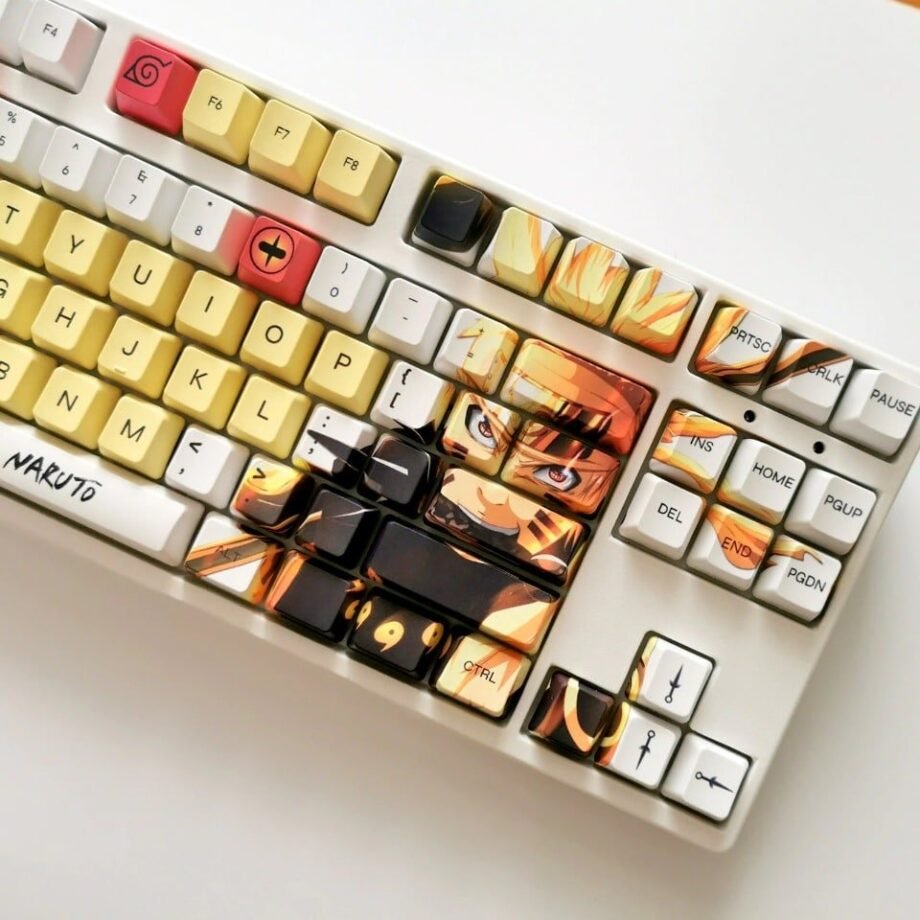
Looking for Naruto keycaps that transform your keyboard into a tribute to the Hidden Leaf Village, Akatsuki’s dramatic power, or legendary Hokage legacy? You’ve found the complete Naruto keycaps guide for 2026, covering everything from understanding the series’ iconic visual language to choosing themed sets that capture specific ninja clans, organizations, and power manifestations. Whether you want Uzumaki Naruto’s orange and blue energy, Akatsuki’s black and red menace, or Uchiha Sharingan symbolism, this guide helps you build a keyboard that represents your ninja way.
Naruto’s two-decade journey from outcast to Hokage created one of anime’s most recognizable visual identities. Orange jumpsuits, red cloud patterns, Sharingan eyes, and Hidden Leaf headbands became cultural symbols extending far beyond the series itself. Naruto keycaps translate these iconic elements into daily typing experience, letting fans express their connection to characters, clans, and the Will of Fire through their keyboard aesthetics.
This guide breaks down Naruto’s distinct visual themes, explores available keycap designs organized by villages and organizations, explains clan and bloodline symbolism, showcases power manifestation aesthetics, and helps you choose sets that authentically represent your favourite aspects of the Naruto universe.
Understanding Naruto’s Visual Language
Before selecting Naruto keycaps, understanding the series’ distinctive aesthetic elements clarifies which designs will resonate most powerfully with your specific Naruto connections.
Cultural Impact and Recognition
Naruto ranks among anime’s most globally recognizable properties. The series ran for 15 years (2002-2017) across 720 episodes, created cultural phenomena around ninja headbands and Akatsuki cloaks, and introduced concepts like “believe it” catchphrases and Rasengan hand signs into mainstream awareness.
This recognition matters for keycaps. Naruto-themed keyboards communicate instantly to anyone familiar with anime culture. The orange and blue colour combination alone signals Naruto identity before specific character details become visible. This differs from more niche anime where only dedicated fans recognize the reference.
When you choose Naruto keycaps, you’re selecting from aesthetics that carry established cultural meaning. An Akatsuki black and red keyboard reads as “villain energy” even to casual viewers. Hidden Leaf orange and blue signals “protagonist determination.” These associations enhance the personal meaning your keyboard carries.
Iconic Visual Elements
Naruto’s visual identity relies on specific recurring elements that make for powerful keycap designs:
Colour combinations: Orange and blue (Naruto’s jumpsuit), black and red (Akatsuki cloaks), green and orange (Team 7 vests), red and white (Uchiha clan), yellow and black (Sage Mode).
Symbols and insignias: Hidden Leaf village symbol (spiral leaf), Uchiha clan fan, Uzumaki clan spiral, Akatsuki red cloud pattern, Sharingan eye patterns, clan crests.
Character-specific markers: Naruto’s whisker marks, Kakashi’s Sharingan, Sasuke’s curse mark, Itachi’s crow motifs, Jiraiya’s scroll aesthetic.
Power manifestations: Nine-Tails chakra (red/orange glow), Sage Mode markings (orange around eyes), Sharingan evolution stages, Susanoo energy forms.
These elements translate effectively to keycap designs because they’re bold, simple, and instantly recognizable. A single red cloud on black background immediately signals Akatsuki without requiring character faces or complex illustrations.
Why Naruto Works for Keyboards
Naruto aesthetics suit mechanical keyboards particularly well for specific reasons:
Bold colour blocking: Naruto’s visual design favours solid colour combinations (orange/blue, black/red) that work excellently with keycap layouts. Modifier keys in one colour, alphas in another creates natural character representation.
Symbol-driven identity: The series uses symbols (village marks, clan crests, Sharingan patterns) that look professional even at keycap legend size. You get Naruto identity without requiring large character illustrations.
Multiple aesthetic paths: Unlike anime with single aesthetic direction, Naruto offers distinct visual identities. You can build Hidden Leaf hero keyboards, Akatsuki villain keyboards, or Uchiha clan keyboards with completely different aesthetics while staying within the Naruto universe.
Universal appeal: Naruto’s mainstream recognition means your keyboard communicates “I like this specific thing” rather than just “I like anime generally.” The specificity creates stronger personal connection.
Hidden Leaf Village Themes: Orange and Blue Determination

The Hidden Leaf Village represents Naruto’s primary aesthetic, built around Uzumaki Naruto’s orange jumpsuit and the village’s blue and green colour palette.
Naruto Uzumaki Core Aesthetic
The most iconic Naruto keyboard aesthetic centres on Uzumaki Naruto himself. Orange modifiers with blue alphas (or reversed) immediately communicate Naruto energy. This colour combination is so distinctive that even without explicit Naruto imagery, orange and blue together reads as Naruto reference to anime fans.
The Uzumaki Naruto keycaps set captures this core aesthetic with orange and blue colour blocking that mirrors Naruto’s jumpsuit. The set works whether you want subtle Naruto reference (the colours alone communicate enough) or explicit tribute (when paired with Naruto novelty keys).
Orange and blue creates specific psychological effects. Orange signals energy, enthusiasm, and determination – all central to Naruto’s character. Blue provides balance, representing loyalty, trust, and the Hidden Leaf’s protective nature. The combination creates optimistic, energetic workspace atmosphere without being overwhelming.
This colour pairing works excellently in professional environments because orange and blue are complementary colours that create visual interest without reading as childish. Your keyboard has personality without screaming “anime” to observers unfamiliar with the series.
Team 7 and Hokage Legacy
Beyond Naruto individually, Hidden Leaf aesthetics can represent Team 7 (Naruto, Sasuke, Sakura, Kakashi) or the Hokage legacy. This expands colour options while maintaining Hidden Leaf identity.
Green and orange represent the Hidden Leaf flak jackets worn by Jonin and above. This creates more subtle Naruto keyboard than pure orange/blue while signaling deeper series knowledge. Green modifiers with orange accents and white or grey alphas creates professional aesthetic that Hidden Leaf fans recognize immediately.
Yellow and orange together reference Hokage robes and Sage Mode simultaneously. This represents Naruto’s ultimate achievement (becoming Seventh Hokage) and his signature power-up. For fans who connected most strongly with Naruto’s journey to become Hokage, this colour combination captures that specific narrative arc.
The Hokage legacy extends beyond Naruto. Third Hokage, Fourth Hokage (Minato), and Seventh Hokage each have distinct visual elements that translate to keycap designs. Yellow and white represents Minato’s aesthetic. Red and white with monkey motifs represents Third Hokage Hiruzen. The flexibility allows multiple Hidden Leaf interpretations.
Will of Fire Philosophy
“The Will of Fire” represents the Hidden Leaf’s core philosophy – protecting the village and the next generation even at personal cost. This concept translates to keyboard aesthetics through warm colour palettes and protective symbolism.
Keyboards representing Will of Fire use warm tones: oranges, reds, yellows, and warm whites. These create emotional warmth that mirrors the philosophy’s emphasis on bonds and protection. Cool blues and greens can accentuate, but warm tones dominate.
The Hidden Leaf village symbol (stylized leaf in circle) works excellently as keycap novelty or accent. Placed on Escape key or Windows key, it signals village loyalty without requiring character-specific imagery. This makes the keyboard more about village identity than individual character worship.
For fans whose primary Naruto connection is the series’ emphasis on mentorship, protecting loved ones, and inherited will, Hidden Leaf aesthetics provide perfect representation without requiring explicit character references.
Akatsuki Organization: Black and Red Villain Aesthetics

Akatsuki represents Naruto’s most visually striking organization. Black cloaks with red cloud patterns create instantly recognizable villain aesthetic that many fans prefer over protagonist designs.
Red Clouds on Black: Iconic Villain Design
Akatsuki’s design genius lies in its simplicity. Black base with red cloud patterns creates dramatic, memorable aesthetic that requires no character faces or complex artwork. The red clouds alone communicate “Akatsuki” to anyone familiar with Naruto.
The Backlit Naruto Akatsuki keycaps captures this aesthetic perfectly with black base and red accents. Backlit capability adds extra dimension – RGB underglow creates effect similar to chakra emanation, enhancing the “powerful villain” atmosphere.
Black and red colour psychology creates different workspace energy than Hidden Leaf orange/blue. Black represents power, mystery, and sophistication. Red adds danger, passion, and intensity. The combination creates bold, confident aesthetic perfect for people who embrace villain aesthetics or prefer darker colour schemes.
Akatsuki keyboards work particularly well in low-light gaming environments. Black keycaps with red accents and RGB underglow create dramatic visual effect without being overwhelming. The aesthetic signals “serious gamer who also appreciates anime” rather than “casual fan.”
Individual Akatsuki Member Aesthetics
While unified by black and red, individual Akatsuki members offer aesthetic variations:
Itachi Uchiha: Red and black with crow motifs. Represents the tragic antagonist whose villainy masks deeper loyalty. Keyboards featuring Uchiha clan fan symbol with Akatsuki colours create layered identity – villain organization, heroic clan lineage, and personal tragedy intersect.
Pain/Nagato: Orange hair and purple Rinnegan eyes create orange and purple accent opportunities within black/red base. Represents god-complex villainy and the pain of loss simultaneously.
Deidara: Yellow and black could accentuate standard Akatsuki aesthetic, representing his art-is-explosion philosophy. Less common but offers unique variation on Akatsuki theme.
Kisame: Blue skin and shark-like features suggest blue accents on black/red base, though this is less commonly translated to keycap designs.
The flexibility allows Akatsuki keyboards to represent the organization generally or specific members whose stories resonated most strongly. For fans whose favourite character wears the Akatsuki cloak, member-specific aesthetics create deeper personal connection.
Villain Appeal and Antihero Energy
Many fans gravitate toward Akatsuki aesthetics not despite their villain status, but because of it. The antihero appeal creates different keyboard energy than protagonist designs.
Akatsuki represents power without restraint, individuality over conformity, and pursuing goals regardless of society’s approval. For people who identify more with outsider status than mainstream heroism, Akatsuki keyboards express that identity.
The black and red aesthetic also appeals beyond Naruto specificity. Even observers unfamiliar with Naruto recognize black/red as sophisticated colour combination. Your keyboard reads as “bold design choice” to general audiences while communicating “Akatsuki loyalty” to Naruto fans.
Villain aesthetics paradoxically often represent heroism to fans. Itachi’s sacrifice, Pain’s philosophy about ending war through fear, and Obito’s corruption by loss all represent complex moral positions. Akatsuki keyboards can signal appreciation for narrative complexity rather than simple villain worship.
Clan and Bloodline Symbolism
Naruto’s clan system creates distinct visual identities beyond village and organization affiliations. Clan keycaps represent bloodline legacy, inherited power, and family history.
Uchiha Clan: Sharingan and Fire
The Uchiha clan offers the most developed aesthetic among Naruto clans. Red and white clan colours, Uchiha fan symbol, and Sharingan eye patterns create multiple keycap design opportunities.
Sharingan patterns work excellently as keycap accents or novelty keys. The eye’s distinctive red with black tomoe (comma shapes) translates to bold keycap designs that look striking without requiring detailed artwork. Escape key Sharingan creates powerful focal point while maintaining usable keyboard.
Red and white colour scheme: Uchiha clan colours create sophisticated aesthetic that works in any environment. Red modifiers with white alphas (or reversed) signals Uchiha affiliation while creating high-contrast, professional appearance.
Fire element association: Uchiha specialized in fire jutsu, suggesting red, orange, and yellow accent possibilities. Warm colour gradients can represent both clan identity and elemental affinity simultaneously.
For fans whose primary Naruto connection involves Sasuke, Itachi, Madara, or Uchiha clan tragedy, clan-specific keyboards provide more precise representation than village or organization themes.
Uzumaki Clan: Spiral Seals and Vitality
The Uzumaki clan, while smaller in member count than Uchiha, offers distinct aesthetic built around spiral symbols and sealing jutsu.
Red and white or red and blonde: Uzumaki clan colours mirror Uchiha somewhat but emphasize vitality and endurance over sharingan power. Red represents the clan’s powerful life force and chakra reserves.
Spiral/whirlpool motifs: The Uzumaki clan symbol (spiral) represents sealing techniques and Naruto’s name meaning (maelstrom). Spiral novelty keys or pattern accents create Uzumaki identity distinct from general Naruto aesthetics.
Sealing formula patterns: Advanced Uzumaki keycaps could feature fuinjutsu (sealing formula) patterns that represent the clan’s specialty. This appeals to fans who appreciated the series’ more technical aspects.
The Uzumaki aesthetic connects specifically to Naruto, Kushina (his mother), and Nagato (Pain) – characters whose common thread is exceptional chakra and life force rather than sharingan power. For fans whose favourite characters share this bloodline, Uzumaki-specific keyboards honor that connection.
Hyuga Clan: Byakugan and Gentle Fist
The Hyuga clan provides alternative to Sharingan-dominated aesthetics with Byakugan (white eye) and Gentle Fist fighting style.
White and lavender colours: Hyuga members wear white/cream clothing with lavender accents, creating soft, elegant aesthetic distinct from Uchiha’s bold red or Naruto’s bright orange.
Byakugan patterns: The white eye with visible veins creates striking design element, though it’s less commonly translated to keycaps than Sharingan due to less mainstream recognition.
Elegant, traditional aesthetic: Hyuga clan’s emphasis on tradition and propriety suggests more restrained keycap designs compared to Naruto or Akatsuki’s bold approaches.
For fans of Neji or Hinata whose character journeys involved breaking free from or redefining clan expectations, Hyuga aesthetics carry specific meaning about tradition versus individuality.
Power Manifestation Themes

Beyond villages, organizations, and clans, Naruto keycaps can represent specific power systems and transformations central to the series’ action.
Sage Mode and Natural Energy
Sage Mode represents one of Naruto’s signature power-ups, marked by orange pigmentation around the eyes and enhanced abilities.
Orange and yellow combinations: Sage Mode keycaps emphasize warm colours representing natural energy absorption. Orange modifiers with yellow accents and white or cream alphas create warm, energetic aesthetic.
Toad motifs: Since Naruto learned Sage Mode at Mount Myoboku, toad-related imagery or green accents (representing Gamabunta and toad summons) can supplement orange/yellow Sage Mode base.
The Uzumaki Naruto Sage Mode keycaps specifically captures this aesthetic with orange and yellow colour blocking that represents natural energy mastery.
Sage Mode aesthetics appeal to fans who appreciated Naruto’s self-taught power development rather than inherited bloodline abilities. It represents training, persistence, and mastering nature’s energy rather than genetic advantages.
Tailed Beast and Jinchuriki Themes
The Nine-Tails (Kurama) and other tailed beasts offer distinct aesthetic possibilities built around their chakra manifestations.
Red and orange gradients: Nine-Tails chakra appears as red/orange energy. Keycaps with red-to-orange colour transitions represent tailed beast chakra leaking or controlled manifestation.
The Bijuu Demon Naruto keycaps captures tailed beast aesthetic with colors representing the demon fox’s power. Grey and brown base with red/orange accents creates more subtle tailed beast reference than pure red/orange.
Gold and orange: Naruto’s Bijuu Mode (when he befriends Kurama) features golden chakra cloak. Gold/yellow keycaps with orange accents represent friendship with the tailed beast rather than struggle for control.
For fans whose favourite Naruto moments involve tailed beast battles, Kurama’s personality, or jinchuriki storylines, beast-themed keyboards express those specific connections.
Sharingan Evolution and Mangekyo Patterns
The Sharingan’s evolution from one tomoe to three tomoe to Mangekyo Sharingan to Eternal Mangekyo Sharingan creates visual progression that translates to keycap design variations.
Standard Sharingan: Red eye with black tomoe comma shapes. Most recognizable form, works excellently as novelty keycap or accent.
Mangekyo Sharingan: Each character’s Mangekyo features unique pattern (Itachi’s windmill, Sasuke’s six-pointed star, Kakashi’s triangle). These create more specialized designs appealing to fans of specific characters.
Red and black colour scheme: All Sharingan forms use red and black, creating consistent aesthetic across evolutionary stages. Red modifiers with black alphas (or reversed) works universally.
Sharingan-themed keyboards specifically appeal to fans who appreciated the Uchiha clan storylines, power scaling through loss and tragedy, and the visual technique’s combat applications. It’s more specific than general Naruto or even general Uchiha themes.
Choosing Your Naruto Keycap Path

With multiple distinct aesthetic directions within Naruto universe, structured decision-making helps identify which theme authentically represents your connection to the series.
Character vs Theme vs Organization
If your Naruto connection centers on specific character: Choose aesthetics matching that character’s visual identity. Naruto himself (orange/blue), Sasuke (blue/purple/black), Kakashi (grey/silver), Itachi (black/red with crow motifs).
If you connect with broader themes: Select aesthetics representing concepts rather than individuals. Will of Fire (warm colours), redemption arcs (mixing villain and hero colours), power of friendship (Team 7 multi-colour approach).
If you prefer organization/group identity: Akatsuki, Hidden Leaf, or specific ninja teams offer group affiliation expression rather than individual character worship.
If you value power systems: Sage Mode, Tailed Beast chakra, or Sharingan evolution provide alternative to character-specific designs.
The distinction matters because it affects how your keyboard communicates Naruto fandom. Character-specific keyboards say “I love this person.” Theme-specific keyboards say “I connect with this idea.” Organization keyboards say “I identify with this group.”
Bold vs Subtle Naruto References
Naruto keycaps range from unmistakably anime-themed to subtly Naruto-coded:
Maximum Naruto identity: Orange and blue colour blocking, Akatsuki red clouds on black, explicit character imagery. These keyboards proudly announce Naruto fandom to anyone viewing your setup.
Moderate Naruto reference: Clan symbols as novelties, colour schemes matching characters without explicit imagery, village symbols on accent keys. Recognizable to Naruto fans, reads as “interesting colour choice” to others.
Subtle Naruto coding: Colour combinations (orange/blue, black/red) without any explicit Naruto imagery. Only dedicated fans recognize the reference. Your keyboard maintains professional appearance while expressing fandom to those who know.
Consider your environment and personal preference for fandom expression. Professional workplaces might benefit from subtle approaches. Home gaming setups can embrace maximum Naruto identity without concern.
Protagonist vs Antagonist Energy
Naruto offers clear aesthetic split between hero (Hidden Leaf) and villain (Akatsuki) identities:
If you gravitate toward hero energy: Orange/blue Naruto aesthetics, green/white Hidden Leaf colours, warm tones representing Will of Fire. Creates optimistic, determined workspace atmosphere.
If you prefer antihero/villain aesthetics: Black/red Akatsuki themes, darker colour palettes, power-focused symbolism over loyalty themes. Creates bold, confident workspace with edge.
If you appreciate moral complexity: Mixed aesthetics representing characters who moved between hero and villain roles (Sasuke, Obito, Itachi). Black base with both red and blue accents acknowledges the nuance.
Your protagonist vs antagonist preference affects not just aesthetics but the psychological energy your keyboard brings to your space. Hero keyboards inspire. Villain keyboards empower. Mixed keyboards acknowledge complexity.
Single Character vs Universe-Wide
Single character devotion: If one Naruto character defined your series experience (Naruto himself, Sasuke, Itachi, Kakashi, etc.), dedicate your entire keyboard to their aesthetic. This creates cohesive, focused design.
Universe appreciation: If you love Naruto broadly rather than one character specifically, combine elements representing multiple aspects. Orange/blue base (Naruto) with red cloud accent (Akatsuki) with Sharingan novelty (Uchiha) acknowledges diverse series elements.
Story arc specific: If specific Naruto arcs resonated most (Chunin Exams, Sasuke Retrieval, Pain Arc, War Arc), build aesthetics around those narrative moments rather than general series identity.
Single-character keyboards create stronger visual impact and clearer identity statement. Universe-wide keyboards demonstrate broader appreciation but risk aesthetic confusion if elements clash.
Building Your Naruto Keyboard Setup
Practical approaches to creating Naruto-themed keyboards that balance aesthetic vision with typing functionality.
For Hidden Leaf Loyalists
Start with orange and blue foundation: Choose whether orange or blue dominates. Orange modifiers with blue alphas creates bold Naruto energy. Blue modifiers with orange alphas provides more subtle approach with same character reference.
Add Hidden Leaf symbolism: Place Hidden Leaf village symbol on Escape key or Windows key. This focal point clearly establishes village loyalty without requiring character faces across entire keyboard.
Consider Team 7 accents: Add green (Jonin vest), red (Sakura), purple (Sasuke), or grey (Kakashi) as accent keys without overwhelming core orange/blue identity.
Include inspirational legends: Custom legends featuring Naruto quotes (“I never go back on my word, that’s my ninja way”) or concepts (Will of Fire, Hokage, Believe It) personalize beyond pure colour choices.
Hidden Leaf keyboards work excellently as daily drivers because orange/blue remains energizing without becoming tiring. The colour combination provides workspace optimism.
For Akatsuki Aesthetics
Black and red as foundation: Decide on ratio. All-black with red accents creates sophisticated look. More balanced black/red split creates bolder statement.
Red cloud patterns strategically: Rather than covering keyboard in cloud patterns (which can overwhelm), place one or two cloud novelties as focal points. Escape key and Enter key clouds provide impact without excess.
RGB underglow for chakra effect: Black keycaps with red underglow creates dramatic appearance suggesting chakra emanation. Particularly effective in dark environments for gaming.
Consider member-specific accents: If you favour specific Akatsuki member, add their colour (orange for Pain, yellow for Deidara, blue for Kisame) as single accent key without disrupting core black/red aesthetic.
Akatsuki keyboards excel in low-light environments. The dark aesthetic doesn’t compete with monitor brightness, making it practical for extended gaming or programming sessions.
For Clan Pride Keyboards
Uchiha approach: Red and white base with Sharingan novelty on Escape key creates immediate Uchiha identification. Add Uchiha fan symbol on Windows key or Menu key for additional clan markers.
Uzumaki approach: Red and blonde/yellow combination with spiral symbolism. Less common than Uchiha but more unique. Appeals to fans who appreciated sealing jutsu and vitality themes.
Hyuga approach: White and lavender creates elegant, understated aesthetic. Less overtly anime-themed than Uchiha or Naruto approaches, works well in professional environments.
Multi-clan acknowledge: If you appreciated clan dynamics generally rather than single clan loyalty, combine clan colours as different key groups. Difficult to execute without aesthetic confusion, but possible with careful planning.
Clan keyboards work best when you have strong connection to specific bloodline storylines or family themes within Naruto rather than individual characters alone.
For Power System Themes
Sage Mode setup: Orange and yellow gradients with white accents representing natural energy mastery. Add toad motifs if you want Mount Myoboku references. Creates warm, energetic workspace.
Tailed Beast setup: Red/orange chakra effects with possible gold accents for bijuu mode. Best executed with gradient keycaps showing colour transition representing chakra flow.
Sharingan evolution setup: Red and black base with multiple Sharingan novelties showing evolution stages (one tomoe → three tomoe → Mangekyo). Demonstrates deep Uchiha lore knowledge.
Mixed abilities: If you appreciated multiple power systems equally, dedicate different keyboard sections to different powers. Number row for Sharingan, home row for Sage Mode, modifiers for Tailed Beast. Complex but doable.
Power system keyboards appeal most to fans who appreciated Naruto’s action and power scaling rather than character relationships or story themes.
Naruto Keycaps FAQ
Are Naruto keycaps appropriate for professional workplaces?
Depends on specific design and workplace culture. Subtle approaches (orange/blue colours without explicit anime imagery) work in most professional environments. Clan symbols can read as abstract design rather than anime reference to unfamiliar observers.
Explicit approaches (character faces, large “AKATSUKI” legends, extensive anime imagery) work better in creative industries, tech companies, or home offices. Conservative corporate environments might view them as unprofessional.
Consider starting subtle. If workplace proves accepting, you can always transition to more explicit Naruto keyboards later.
Do I need to have watched all 720 episodes to use Naruto keycaps?
No. Even casual Naruto exposure creates sufficient connection for keycap choice. If you watched early series, loved specific characters, or even just appreciate the aesthetic without deep lore knowledge, Naruto keycaps remain valid choice.
That said, deeper series knowledge enriches the keyboard’s personal meaning. Understanding Akatsuki’s motivations makes black/red keyboards more resonant. Knowing Itachi’s sacrifice adds layers to Uchiha aesthetics.
Can I mix Naruto keycaps with other anime themes?
Technically yes, but carefully. Naruto’s distinctive colour schemes (orange/blue, black/red) clash aesthetically with many other anime palettes. Mixing creates visual confusion unless you’re deliberately building “all anime” keyboard rather than Naruto-specific one.
Better approach: Build dedicated Naruto keyboard. If you love multiple anime, rotate keycap sets rather than mixing incompatible aesthetics on single keyboard.
Which Naruto keycap theme has best typing experience?
Typing experience depends on keycap profile, material, and manufacturing quality rather than visual theme. A well-made Akatsuki set types identically to well-made Uzumaki Naruto set if they share the same technical specifications.
That said, colour choice psychologically affects typing experience. Orange/blue creates energetic feeling. Black/red creates focused feeling. Choose colours matching your desired workspace energy.
Do Naruto keycaps work with any mechanical keyboard?
Naruto keycaps work with any keyboard using Cherry MX-compatible switches (which includes most mechanical keyboards). They require Cherry MX, Gateron, Kailh, or similar cross-stem switches.
They don’t work with Topre, Alps, or other non-Cherry-compatible switch types. Verify your keyboard’s switch type before purchasing.
Are there Naruto keycaps for specific characters besides Naruto himself?
Currently, most Naruto keycaps focus on Uzumaki Naruto, Akatsuki organization, and clan symbolism rather than extensive character-specific options for every character. Sasuke, Itachi, and other major characters typically receive representation through clan colours and symbols rather than dedicated character sets.
For highly specific characters (Kakashi, Gaara, Rock Lee), you might need custom keycap creation or creative combination of existing sets to approximate their aesthetics.
Can I build Naruto keyboard without anime-looking keyboard?
Absolutely. Colour-focused approaches (orange/blue, black/red, red/white) without explicit Naruto imagery, character faces, or Japanese text create keyboards that reference Naruto to fans while appearing as aesthetic colour choices to others.
Use Naruto colour schemes with standard legends. Your keyboard communicates “I made interesting colour decision” to general observers while fellow Naruto fans immediately recognize the reference.
Where can I learn more about Naruto before choosing keycaps?
For comprehensive Naruto background, Viz Media’s official Naruto site provides series information and legal streaming options. Understanding character motivations, clan histories, and organization purposes enriches keycap choice by helping you identify which themes resonate most strongly.
Even watching character introduction episodes or story arc summaries provides sufficient context for meaningful keycap selection.
Your Path to Ninja-Themed Typing

You now understand Naruto’s distinct visual language, how Hidden Leaf and Akatsuki themes create different aesthetics, the significance of clan and bloodline symbolism, how power manifestations translate to keycap designs, and frameworks for choosing themes matching your specific Naruto connections.
Whether you want Uzumaki Naruto’s orange and blue determination, Akatsuki’s black and red villain power, or tailed beast demon energy, Naruto keycaps transform your keyboard into daily expression of your ninja way.
If you’re exploring anime keyboards beyond Naruto, our complete anime keyboard guide covers aesthetic options across multiple popular series.
For other Shonen Jump series, check out our One Piece keycaps guide and Demon Slayer keycaps guide for alternative anime keyboard aesthetics.
Browse our complete anime keycaps collection to explore themed options beyond Naruto.
Your ninja way awaits expression. Naruto keycaps prove that keyboards can represent not just tool function but personal connection to stories that shaped how you see determination, sacrifice, and inherited will. Believe it. Which path calls to you?